The Blood of Dawnwalker [Review]
The trials and horrors of Vale Sangora are indeed compelling, resulting in an atmospheric world filled with rich lore. It's a remarkable starting point, with some nuisances here and there and great room to grow
![The Blood of Dawnwalker [Review]](https://storage.ghost.io/c/99/4e/994ec29e-38c9-4a86-87eb-e15f426ddf35/content/images/size/w1200/2026/09/The-Blood-of-Dawnwalker_20260909190124.jpg)
Right from the beginning of the game one thing was perfectly clear: I can't really predict how the many stories from the region of Vale Sangora will end in The Blood of Dawnwalker. And these said stories not often end in a happy way: the whole land had been taken by Vampires (here called Vrakhir) and while the previous despot was far from being good, burning and killing people infected with the plague, the new Vampire overlords just see the Vale as big cattle field, with people to be protected, sure, but also drained.
This bleak setting is very much in contrast with the sweet-hearted protagonist Coen, that has been transformed into a Vampire by their own regional leader, Brencis, as a punishment. Unbeknownst to all, Coen is actually a Dawnwalker, human by day, Vrakhir at night, and as soon as he discovers that the people of his village, including his family, were kidnapped by the new Lords, the clock starts ticking and there are only 30 days until the coronation that will solidify Brencis as the new Knyaz.
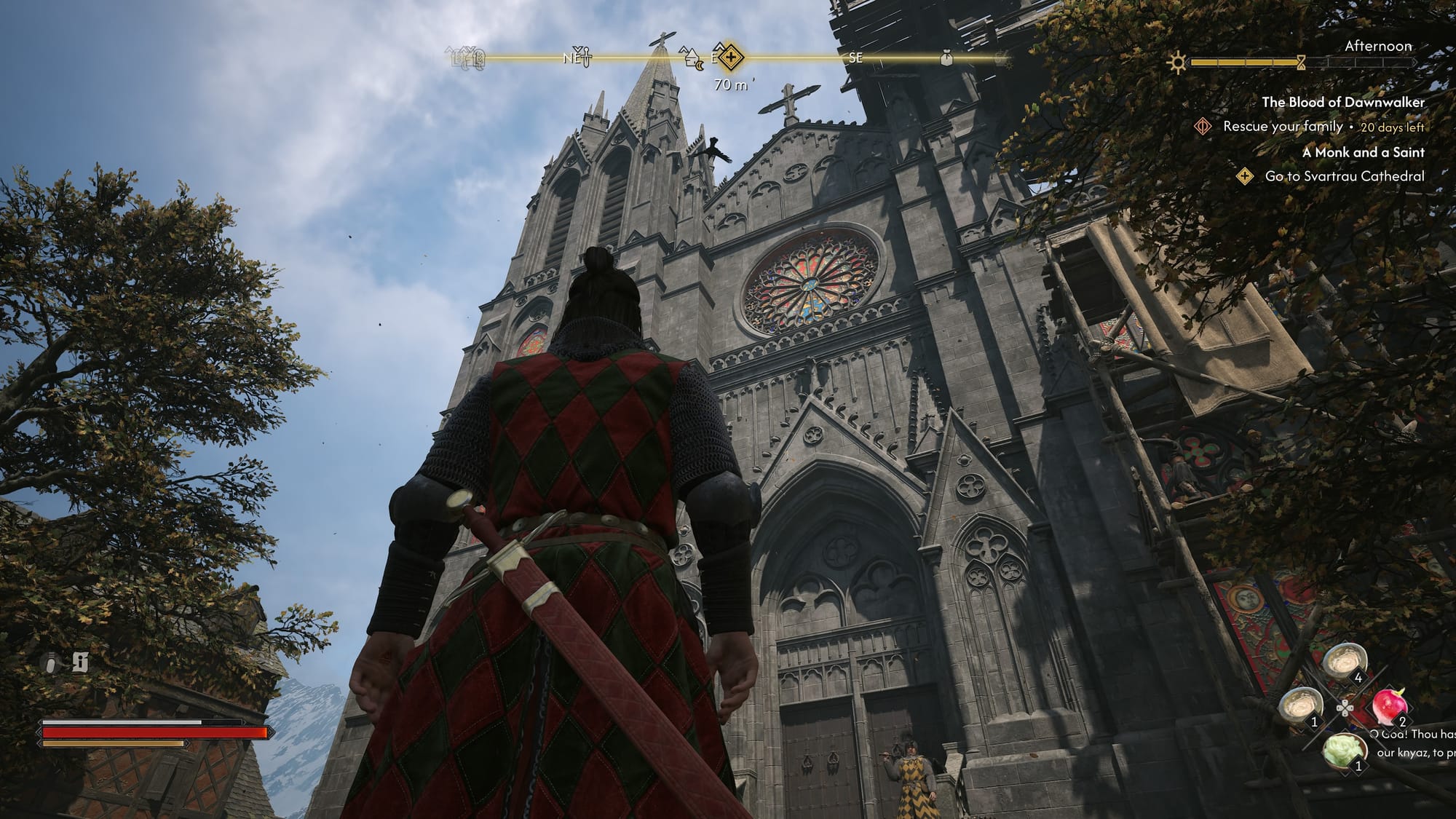
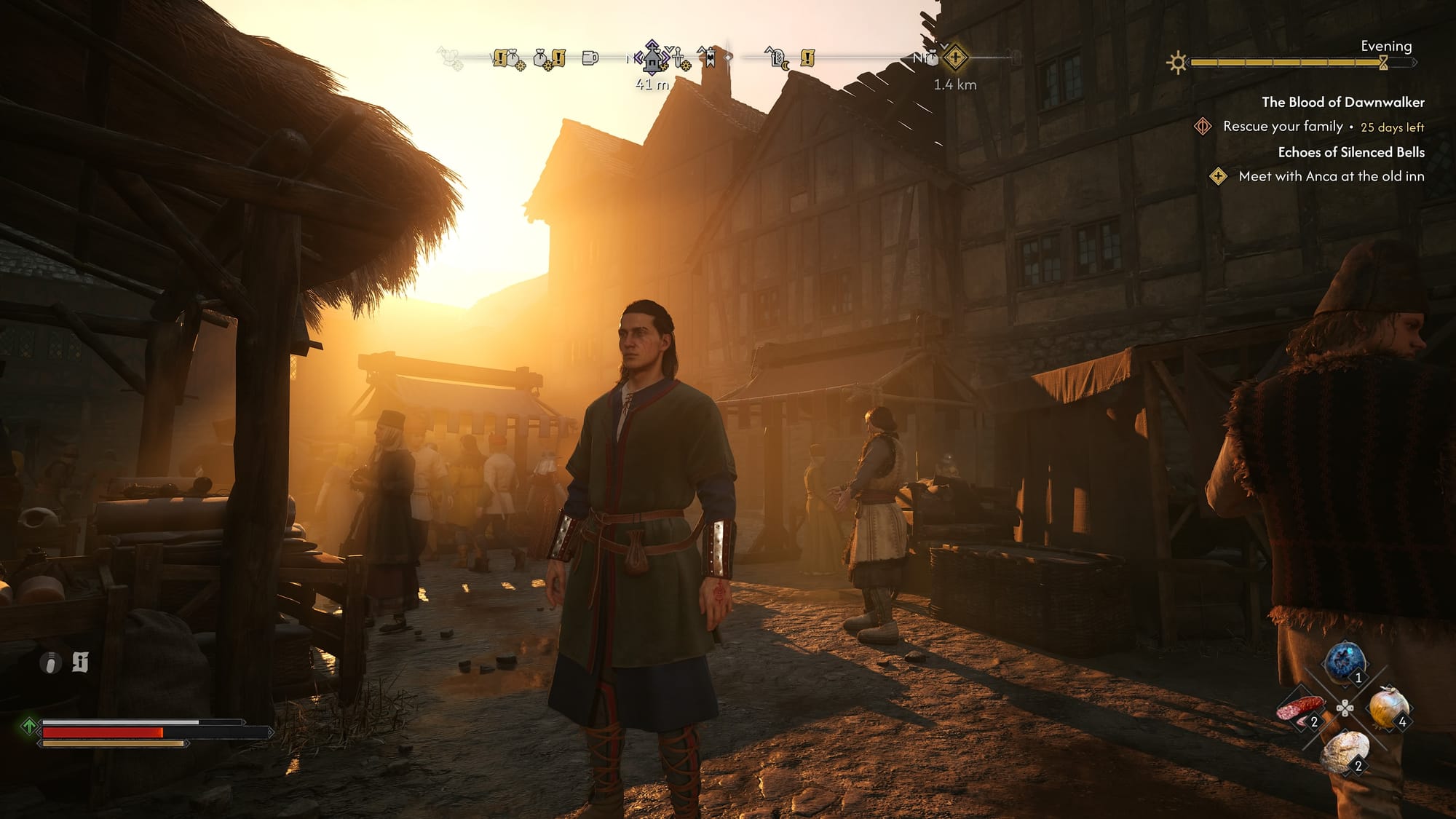
It is a simple story and premise, but The Blood of Dawnwalker uses this setting as a game mechanic – the days are as relevant as they can be. Side and Main stories often require a time slot to be spent, and the day and night are each limited on their own. The first area of the game is a tutorial exactly for that: there may not be time to do it all. Before going a bit deeper on the game, this is the most important thing that needs to be addressed:
The time limit is definitely not a problem. There is enough time to do everything that one would want to do in a single playthrough. Different from many other games in the genre, Dawnwalker is not particularly big – it is possible to finish it (even with a good ending) in about 15 to 20 hours on the day 15 at the latest. I finished the game with all side quests completed with about 40 hours, on the day 25. The time limit works more in a way to enhance questing and exploration while creating a little sense of urgency, but nothing else.
Still, maybe in an effort to make the time progress for the completionists, some decisions were made that I wasn't sure about. Opening chests can sometimes cost time – but not always. This same confusion happens with other side activities as well. Still, it is easy to understand what story is really relevant to pursue and what is a time waster, as the time is only spent when the activity is complete. Also, the system doesn't really cares about a calendar, and I honestly felt that this was a missed opportunity to highlight this system even more. A holiday, maybe? Or having the Mass day to happen every Sunday. Not here.
Either way, it is a strong aspect of Dawnwalker how some experiences can be strikingly different if done by day or night. Although the overall arc is straightforward, the stories in Vale Sangora can be everything but. Dark twists and turns everywhere paint a shadowy picture over the vale, and exploring both the big city of Svartrau and the smaller villas all around was always ominous and intriguing. As I said, the optimistic and empathetic persona of Coen gives an interesting layer of storytelling, because my good deeds and trying to help were actually rewarded with people that will remember what I've done.
I was pleasantly surprised to see how the stories I've partaken actually affected one another. These are sprawling questlines that are very focused on smaller characters and their settings while effortlessly weaving them into Coen's mission. Be it a big brute I helped on a bar or a fasting Vrakhir in the middle of a murder mystery – these relationships that Coen creates throughout the game are very well done, and the only thing that I actually wanted to see more, story-wise. Mostly because some stories are bigger than others while every character is interesting on the supporting cast. Maybe adding some more quests for Vicho and Ocha and making them a romance option would have done it for me. The more realized characters, Lacra, Anca and Marat, were all great and very memorable.
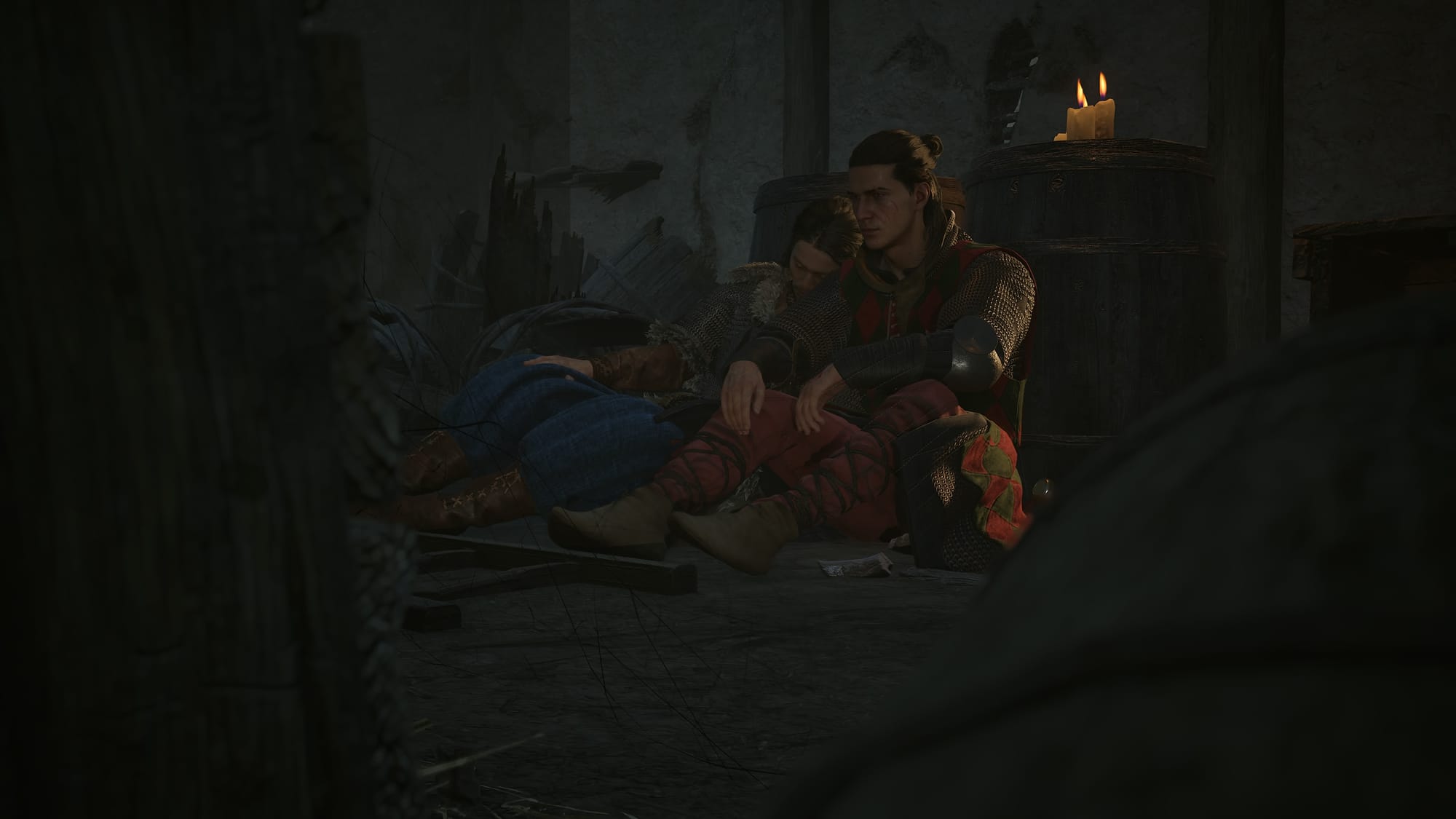
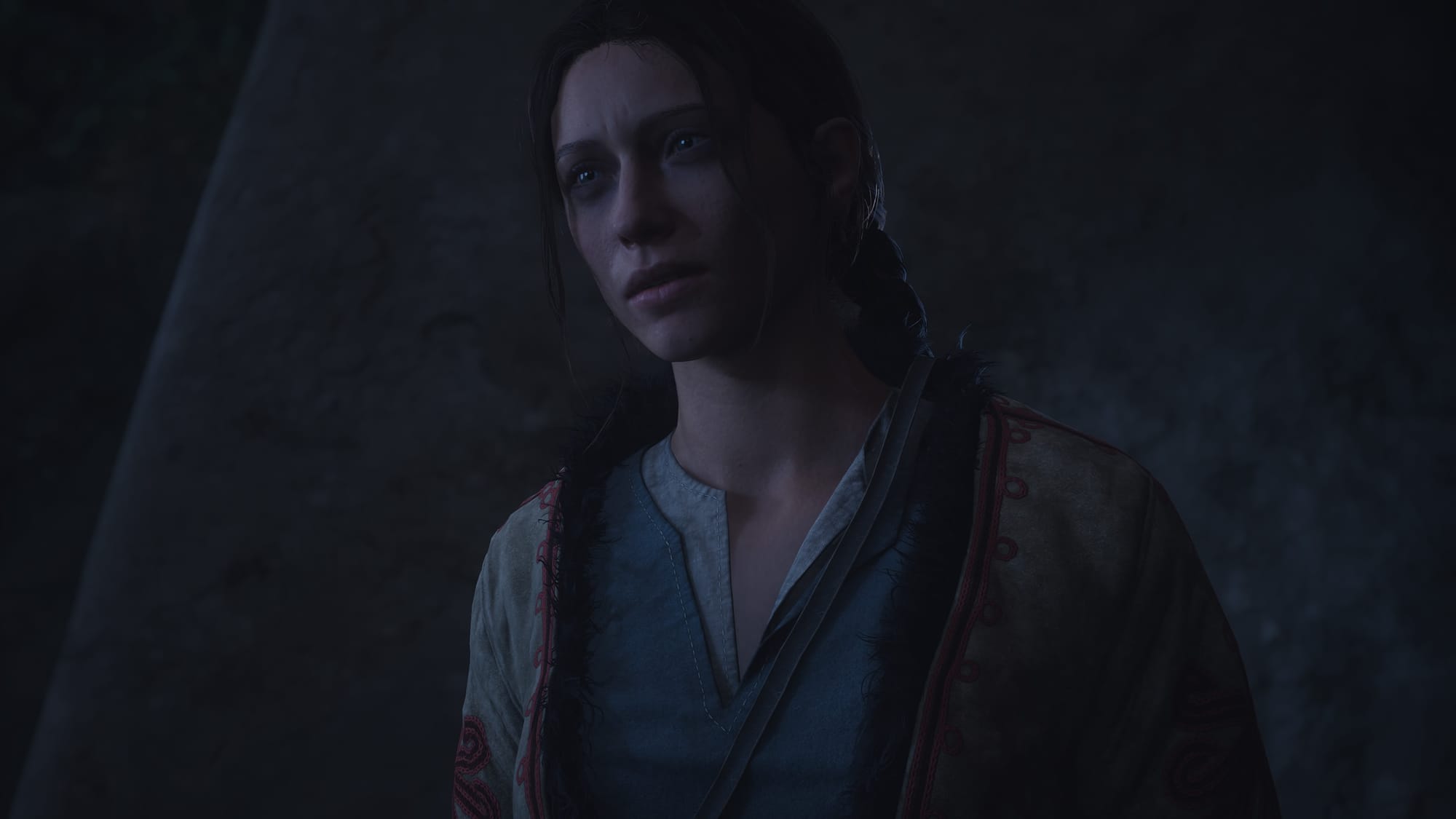
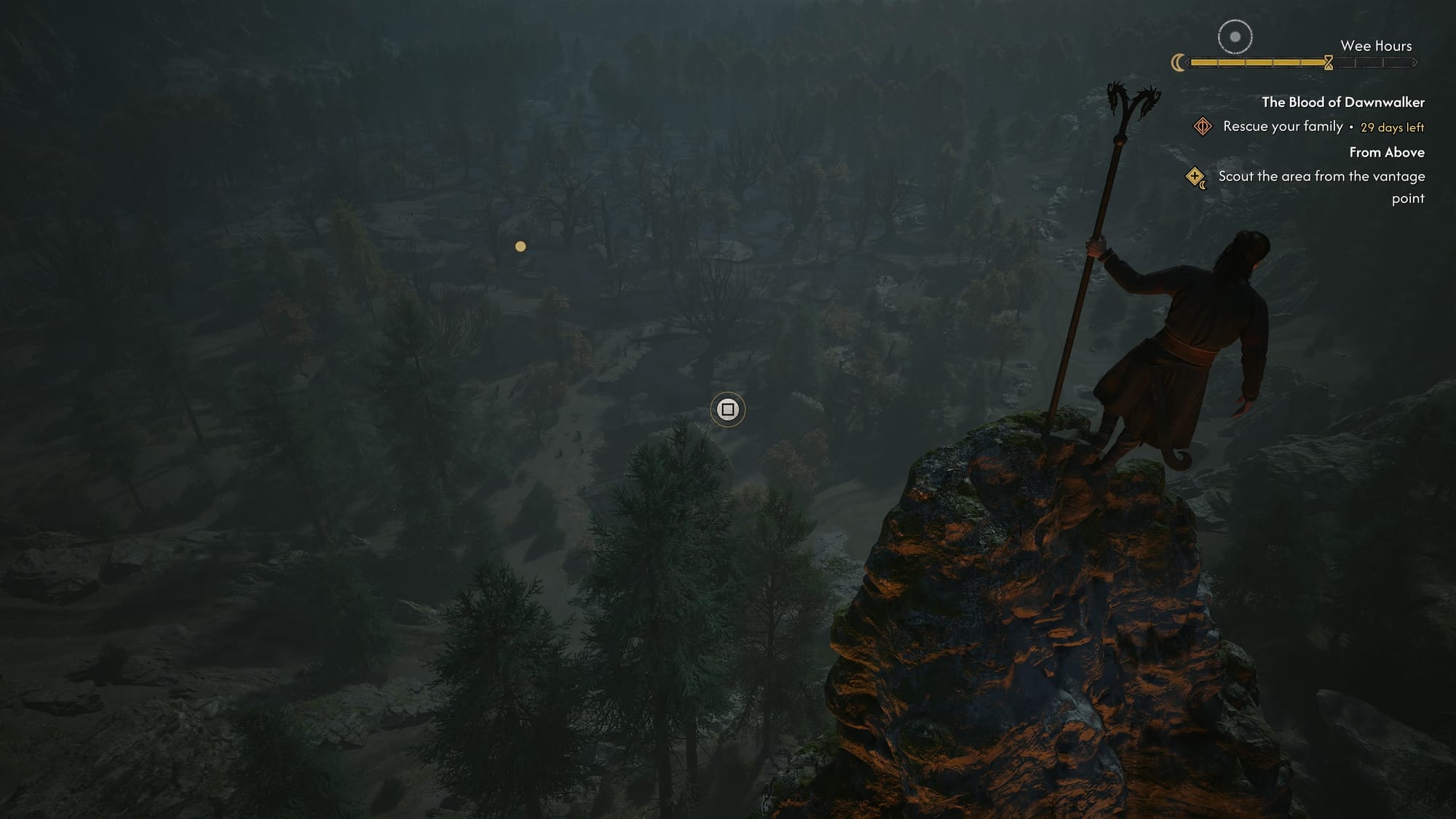
Because this game takes place in a fictional village in our world, the values of the region aren't always that progressive towards many people in society. Dawnwalker cleverly juxtaposes dark horrors made by fictional monsters with the horrors that humans inflicted, and uses the narrative device of Vampirism, as in longevity and rebellion, to comment some harsh realities that people were facing at the time. In narrative twists emblematic of great role playing games, it allows victims to tell their stories, and these were the moments where the cast of this game truly conquered me.
The same cannot really be said about the antagonists here. While Brencis is someone impossible to forget, most of his lackeys felt just like that, lackeys. All of their stories are basically tied to Brencis and only exist to actually develop him. Also, I couldn't really differentiate their fiefdoms, and that was a major problem within this game's exploration. Vale Sangora is pretty and well realized as whole, but I didn't really feel that Vampires were ruling the region for two years, unopposed. The world unfortunately can be a bit lost in the dialogue of its themes sometimes, and the repetitive encounters don't help, worsened by a bad enemy variety.
Still, fantastic stories are sprinkled throughout the mountains and rivers of the vale. A region may be engulfed in mist because of an evil spell, hidden in a macabre convent full of zombie-nuns. A distant, magic tower may be housing a ravaging alchemist, who seems to be meddling with the occult and creating monsters using human flesh. These are the most special moments of this game, when twisted stories are able to live in Vale Sangora.
The day and night cycle works wonders to enhance how unique it is to progress on all of these events. At night, it may be easier to traverse or even break in, but people might not be that receptive to Coen and attack on sight, while at bright sunlight, a guarded place might only be accessible with some social engineering. These clever, non-violent solutions to many stories are way more relevant than having "more points invested in persuasion" could ever be. The better stories can be done in either Vampire or Human form, with progress and outcomes tied to when the stories are done as well.
The more people or animal Coen drains, the higher his Vampirism gets. I think that hunger should've played a bigger role in Dawnwalker, though. At night, the only real friction that being a Vampire may entail is talking with someone at low health, that is, hungry, Coen may succumb to the hunger and kill whoever is in front of him. But this is never really a problem because his hunger doesn't increases through night outside combat, and having blood is as accessible as using a potion can be. I don't really think that the consequences of vampirism are as well implemented as the powers of vampirism were.
Another issue with this game is that most of its activities end up relying a bit too much on the combat system. Don't get me wrong, the combat is great and different enough, with interesting directional strikes and parries that can make or break a fight, but again, there's not much variety, effectively only two weapon styles and because the enemies are very repetitive, the combat feels like work. The great writing holds everything together, though, but the team at Rebel Wolves need to focus on having mini games and actual interesting activities and modes of traversal to make the roleplay really work on the next installments.
Some aspects of the game are too formulaic and menu driven, like the uninteresting crafting and the bland equipment systems. The first is tedious and skippable entirely, a basic menu that lists possible recipes, and the latter is a "numbers go up" kind of gearing, without any special effects or builds really. Undeniably, gameplay rewards are greatly less interesting when simplistic systems are the building blocks of a role playing game, and more complexity was missed in many of them.
Nonetheless, the trials and horrors of Vale Sangora are indeed compelling, resulting in an atmospheric world filled with rich lore. It's a remarkable starting point, with some nuisances here and there and great room to grow.
8/10
![Castlevania: Belmont's Curse [Review]](https://storage.ghost.io/c/99/4e/994ec29e-38c9-4a86-87eb-e15f426ddf35/content/images/size/w720/2026/10/Castlevania_-Belmont-s-Curse_20261019205248.jpg)
![Silent Hill: Townfall [Review]](https://storage.ghost.io/c/99/4e/994ec29e-38c9-4a86-87eb-e15f426ddf35/content/images/size/w720/2026/10/SILENT-HILL_-Townfall_20261012001425-2.jpg)
![Fire Emblem: Fortune's Weave [Review]](https://storage.ghost.io/c/99/4e/994ec29e-38c9-4a86-87eb-e15f426ddf35/content/images/size/w720/2026/10/IMG_9244.jpeg)
Comments ()